I downloaded the Android 9 update and realized fairly quickly that it kinda sucks. Longtime, loyal Google fans like me might be starting to wonder what the hell is going on? So here’s the thing: we’re mice.
A friend of mine likes to say that Google does not fundamentally understand humans. I’m starting to think he’s right. They’re more like scientists, or 50s era psychologists in white lab coats being paid to run ‘experiments’. And by that I mean torture mice.
It’s safe to say that Google’s corporate motto, ‘Don’t be evil’, is largely bullshit. To me, this decline started around the time when Google decided to kill Reader. I was left confused and annoyed, scrambling to find a decent alternative. (Since then I have, but it’s complicated.) Reader was my primary source of news, and now that distinction belongs to Twitter. Feedly is fine but g’damn that Twitter is like a shot of 4 Loco straight to the veins. Can’t stop, won’t stop. [Leaves blog post to check Twitter] Now that the most powerful man in the world, an overweight racist orangutan, uses it as a source to vent and throw excrement, it’s even more addicting. But I digress.
Google is big on experimentation. They dabble in this and that. They’ve traded the design process for the scientific method. Anything can go on the chopping block. Since Reader they’ve killed off 35 other projects, some that were useful and others not so much.
When it comes to the design of the Android mobile OS, this sociopathic method of hacking off the limbs is roughly the same. Google introduces a cool feature, and in the next version it’s gone. Where’d it go? Who knows. No different than a scientist changing a maze in our quest for cheese. For example, I used Save to Inbox to keep a backlog of interesting articles, conveniently saved in a designated inbox section, for weekend reading or posting to a weekly newsletter I help curate. When I couldn’t find it in Android 9, I thought it was a bug until I read they got rid of it (and are considering ditching Inbox as well).
(╯°□°)╯︵ ┻━┻
I’m running out of tables to flip
In Android 9, users can switch through apps as they could in Android 8, but now force quitting is an up swipe instead of a side swipe. In a vacuum, there really is no difference between the two. (Don’t @ me, crazy designers that feel passionately about one or the other and their ‘intuitive meanings’.) But when living inside the Android system from one update to the next, it is a big deal. They changed the behavior of an important feature. If they had previously tested it, designers would have found that users prefer one paradigm over the other. If they hadn’t, and just decided to pick a gesture in Android 8, they should have tested the change before launching 9. I suspect that changing a popular feature after 2 years of being in the wild would have resulted in failure; instead, they arbitrarily violated a consistency heuristic.
A few of the changes are directly ripped from Apple, like hacking the 3.5mm jack off of their flagship devices last year. There is a case to be made that they want a smoother iOS to Android transition, and I suspect this is what they’re doing. But guess what? Android people like Android because it isn’t iOS. It seems no one stopped to think what this would do to existing Android users.
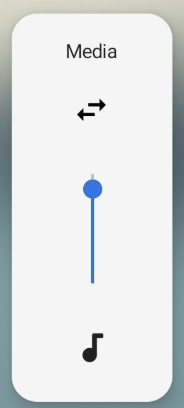
In Android 9, the location of the time has been decoupled from the icons in the system bar. The option to select Wifi networks or Bluethooth devices is removed from the system dropdown; if you search around, you’ll find those are now accessed with a long press and hold. Why? This isn’t intuitive and requires more steps. The sound slider bar is now smaller and on the right hand side, rendering it less accurate. Uninstalling apps is different. And when is the settings page not in constant flux?


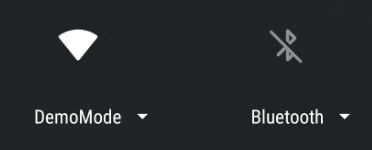


Take the Wifi selection dropdown in Android 8. We’ve seen some form of this for a while: users could turn the Wifi on and off, or they could select from a list of networks to choose from. On 9, the Wifi icon is a simply an on/off toggle. A friend who recently ‘upgraded’ didn’t realize this and started downloading an hour long podcast via mobile data. This could pose real monetary concerns for folks with low data plans. What if one wanted to change bluetooth from their headphones to the audio infotainment while they were in the car, and didn’t realize the design had changed? It’s not fun to think about.
I’m trying not to be an old stodgy man here as I get into an advanced age (34). Change can be good, but it requires deliberate, well thought out reasoning. This is especially true for an OS that has been around for nearly a decade. Changing well established paradigms should be carefully considered and users should be notified immediately. Forcing users to discover changes to well-established core functionality through trial and error is insane.
Change for the sake of change isn’t a design process. Hell, that isn’t even the scientific method. That’s just one psychopath in a lab coat saying to the next, ‘Hey. Let’s see what happens when I do this!’ as he grabs a blowtorch and a can of hairspray.
[how I imagine the rest of that conversation]
Scientist 1: ‘Say, where did you get your degree from?’
Scientist 2: ‘I didn’t. I just had to drown a homeless guy during my interview.’
It’s not all bad — there are some improvements. The Gboard allows a press, hold and swipe on the spacebar to toggle the text cursor. The delete button works in a similar fashion, but it took a crafty mouse to figure this out and another to tell those willing to look it up. I’m sure other cool features exist that will be brought to light. But even here, a Google scientist merely lifted a wall to change the maze, never informing the occupants. We just had to discover it and share it on a forum. (Forums, remember those?) After the next update, it may mysteriously disappear.
Over time, users will get used to these changes. And when things inevitably change again, they will get used to those changes too. And so on and so on, shifting with the whims of overlords in white lab coats. But this mouse no longer has the time or patience to figure out the ever changing maze.
https://medium.com/media/05d5fd32eda31cbd1b83287606744532/href
Android 9 and the death of design was originally published in UX Collective on Medium, where people are continuing the conversation by highlighting and responding to this story.