
Summary
An FX payments platform that leverages across three separate systems—pricing, settlement, and reconciliation—making multi-currency payments.
I led the UX design of a unified FX payment application that consolidated funding sources, beneficiaries, pricing, settlement, approvals, and audit visibility into a single experience—balancing novice usability with trader-level sophistication.
The project evolved over two years in an agile, shifting environment with expanding scope, regulatory considerations, and technical constraints.
The Problem
Executing an FX payment required navigating multiple systems:
- One system to initiate funding
- Another to retrieve live FX pricing
- A third to settle and reconcile the trade
- Later, a fourth system to analyze performance
For novice users (treasury, accounts payable), this fragmentation created confusion and operational risk. For experienced FX traders, flexibility and precision were non-negotiable.
The organization needed:
- A single interface
- Access to all funding accounts and beneficiaries
- Real-time FX pricing
- Approval workflows
- Settlement coordination
- Regulatory audit visibility
But underneath, the systems remained separate.
Phase 0: Selling the Vision
Before engineering began, I was asked to design a high-fidelity prototype that simulated integration across systems.
The goal was not to build it immediately—it was to create something believable enough to secure stakeholder buy-in.
I designed a cohesive, modern interface that:
- Unified funding sources and beneficiaries
- Displayed FX pricing inline
- Modeled trade execution and settlement flows
- Reduced cross-system mental switching
The prototype successfully aligned leadership and unlocked development investment.
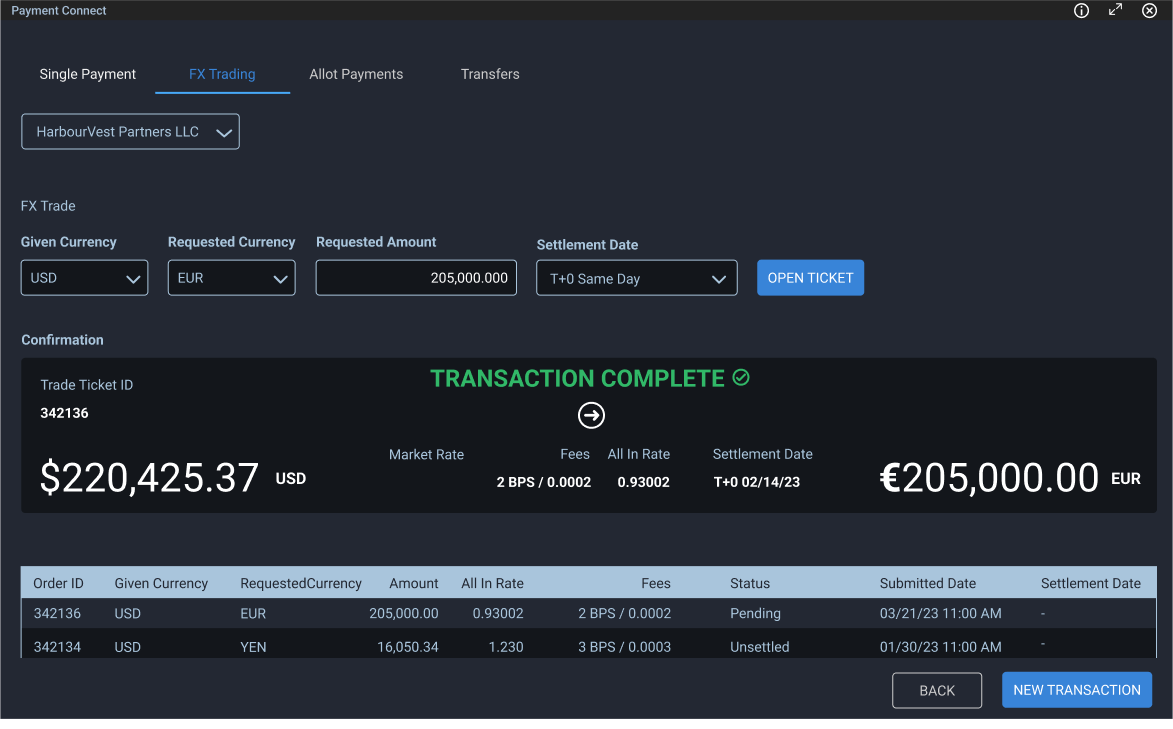
A visually pleasing payments solution to help sell the vision
Designing the Unified Flow
The core payment flow required users to:
- Select the funding account (including currency and balance)
- Select a beneficiary (account, SWIFT, currency)
- Choose settlement date
- Retrieve live FX pricing
- Confirm and submit for approval
Under the hood:
- Pricing was retrieved from a separate FX system
- Settlement occurred in another system
- Reconciliation synced back to the funding source
- Analysis tools were layered in later
The challenge was to make this feel like one coherent action.
Designing for Dual User Types
This system had to serve:
Novice Users
- Accounts payable
- Treasury staff
- Occasional FX users
They needed:
- Clarity
- Guardrails
- Reduced error risk
- Simplified mental models
Experienced Traders
- Expected control
- Expected precision
- Needed access to rate timing and settlement nuance
The interface had to abstract complexity without removing power.
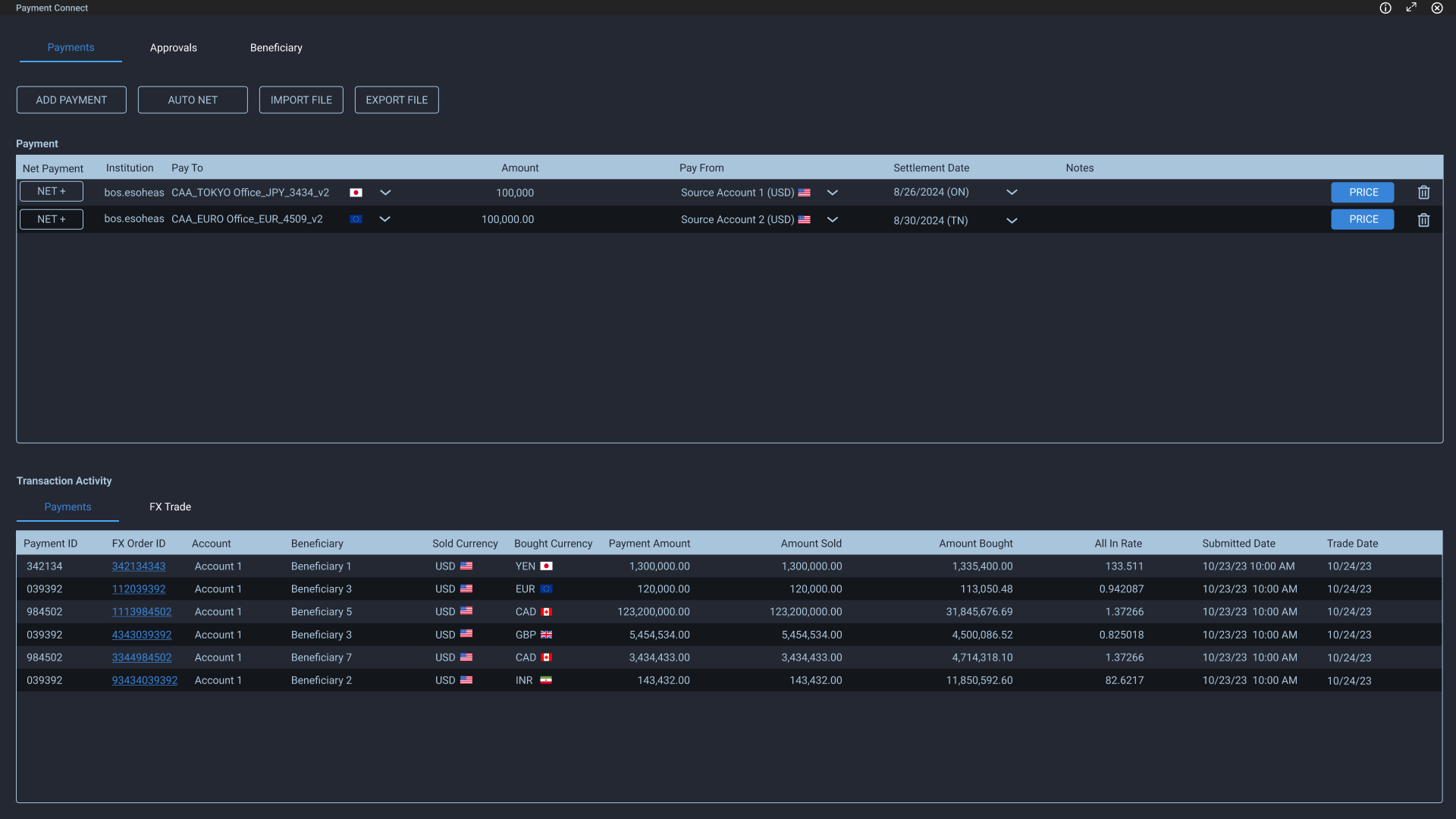
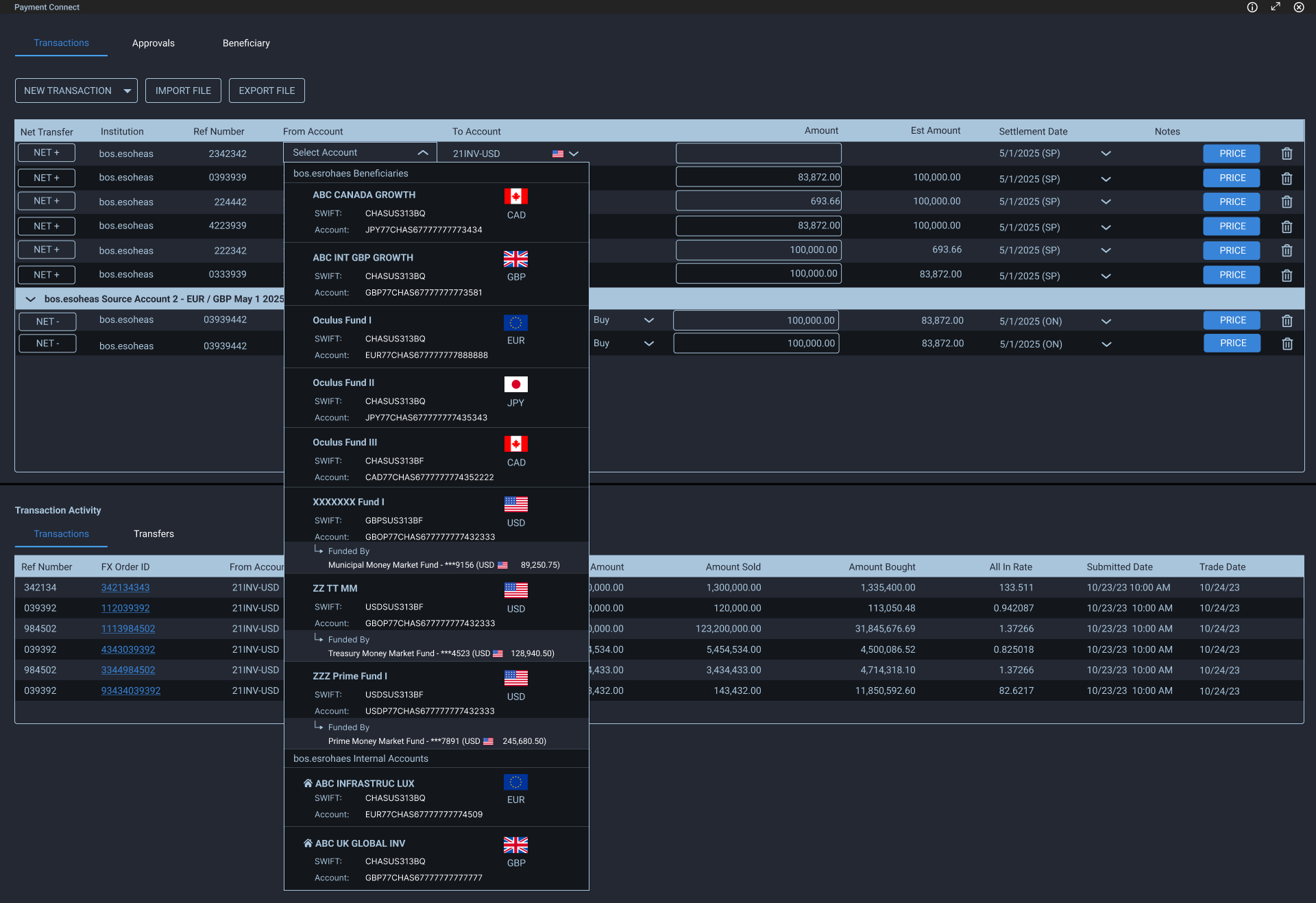
We chose a table style design as not to deviate wildly from current systems
Handling Multiple Payments & Approvals
Scope expanded quickly.
The system needed to:
- Support bulk/multi-payment entry
- Enable grouped FX execution
- Require separate user approvals
- Integrate SWIFT verification for beneficiaries
This introduced new challenges:
- Duplicate beneficiary names with different SWIFT/account numbers
- Overlapping source accounts across currencies
- Multi-currency grouping logic
- Risk visibility during batch operations
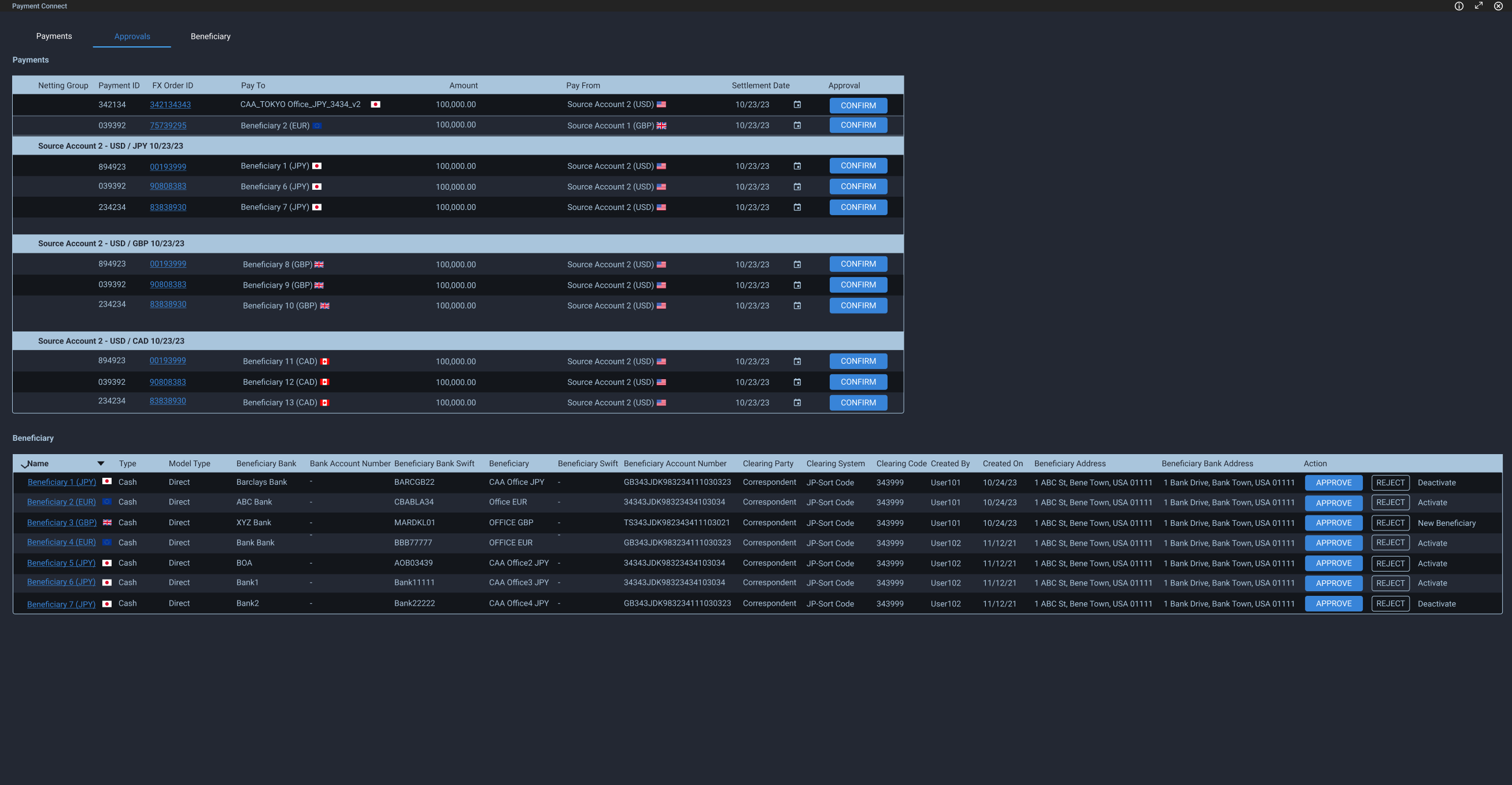
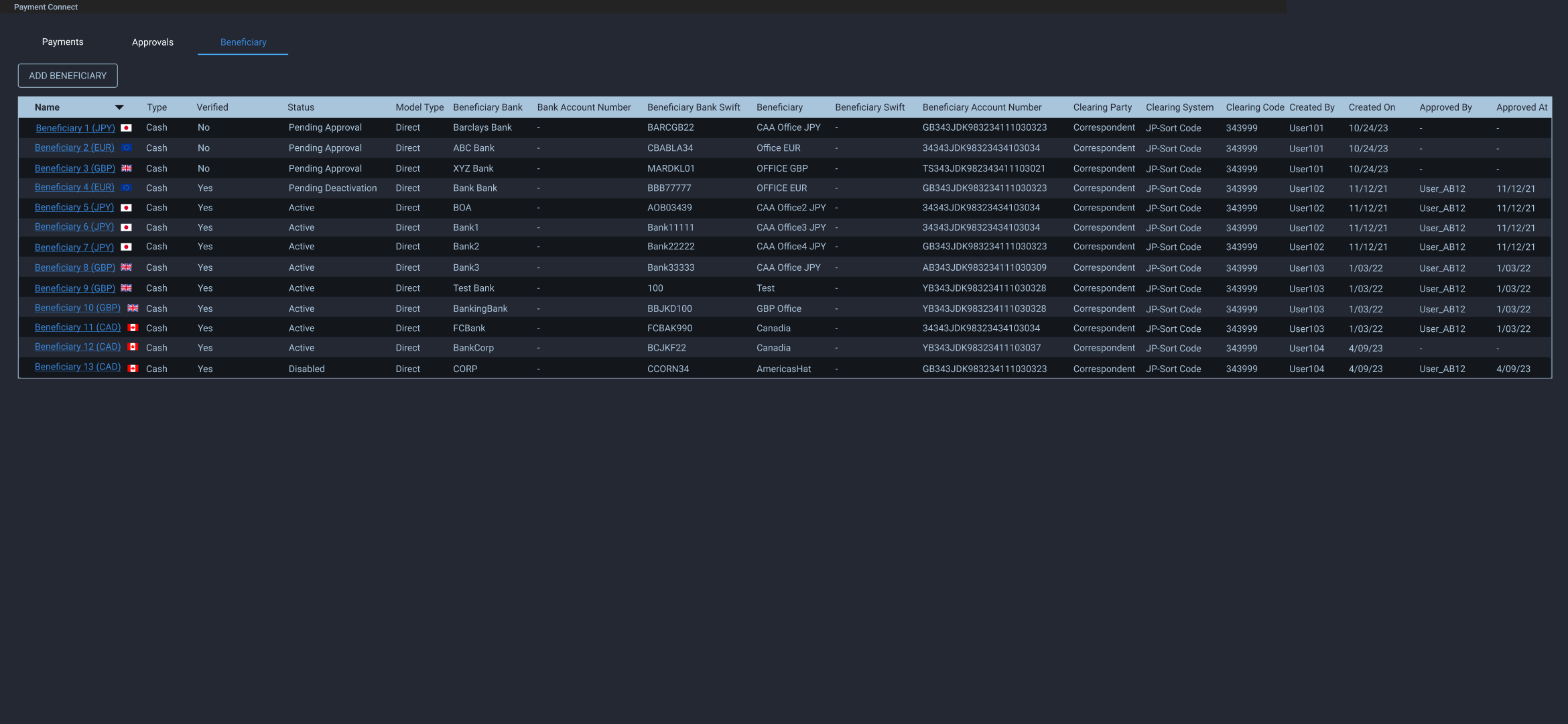
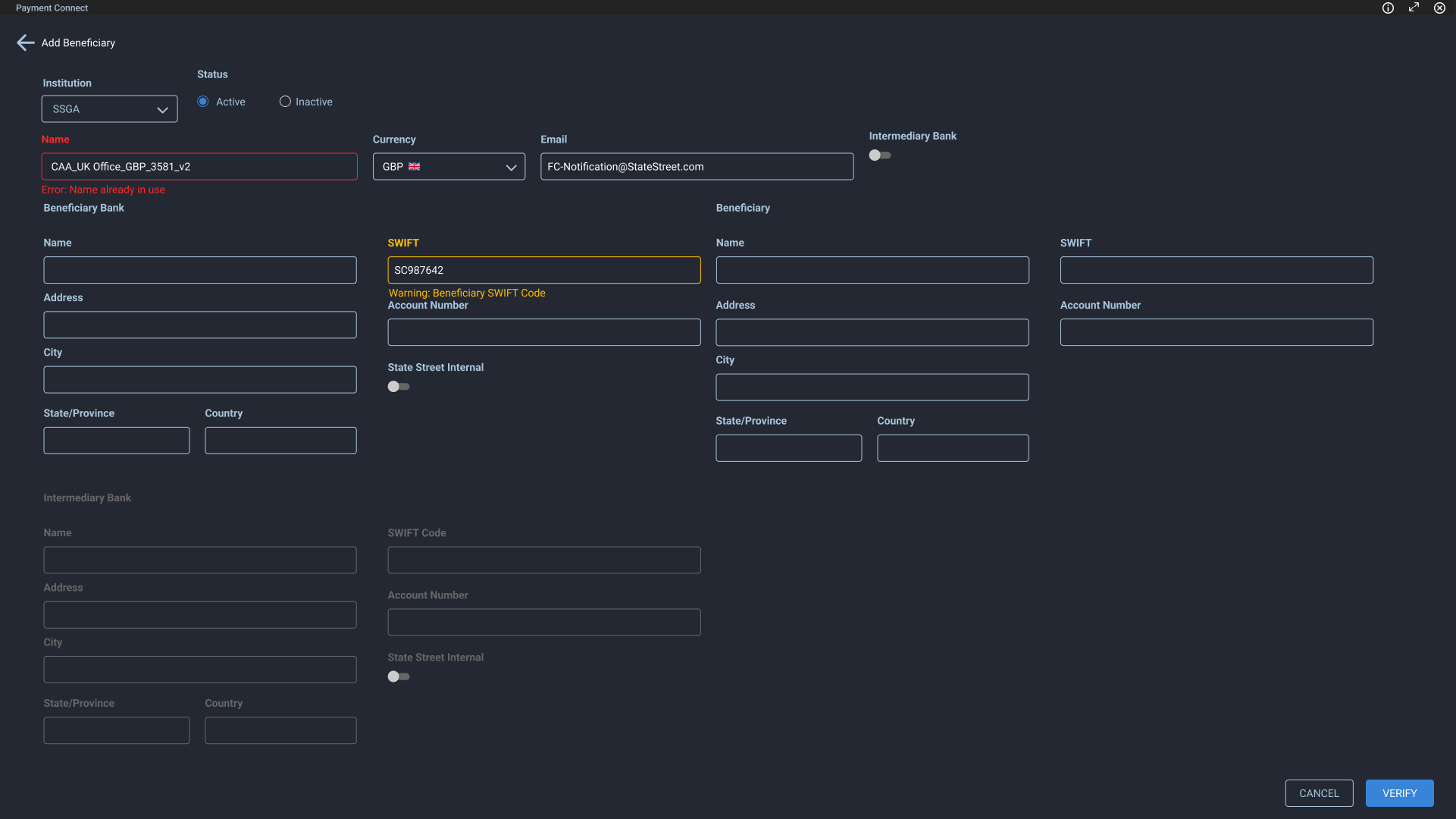
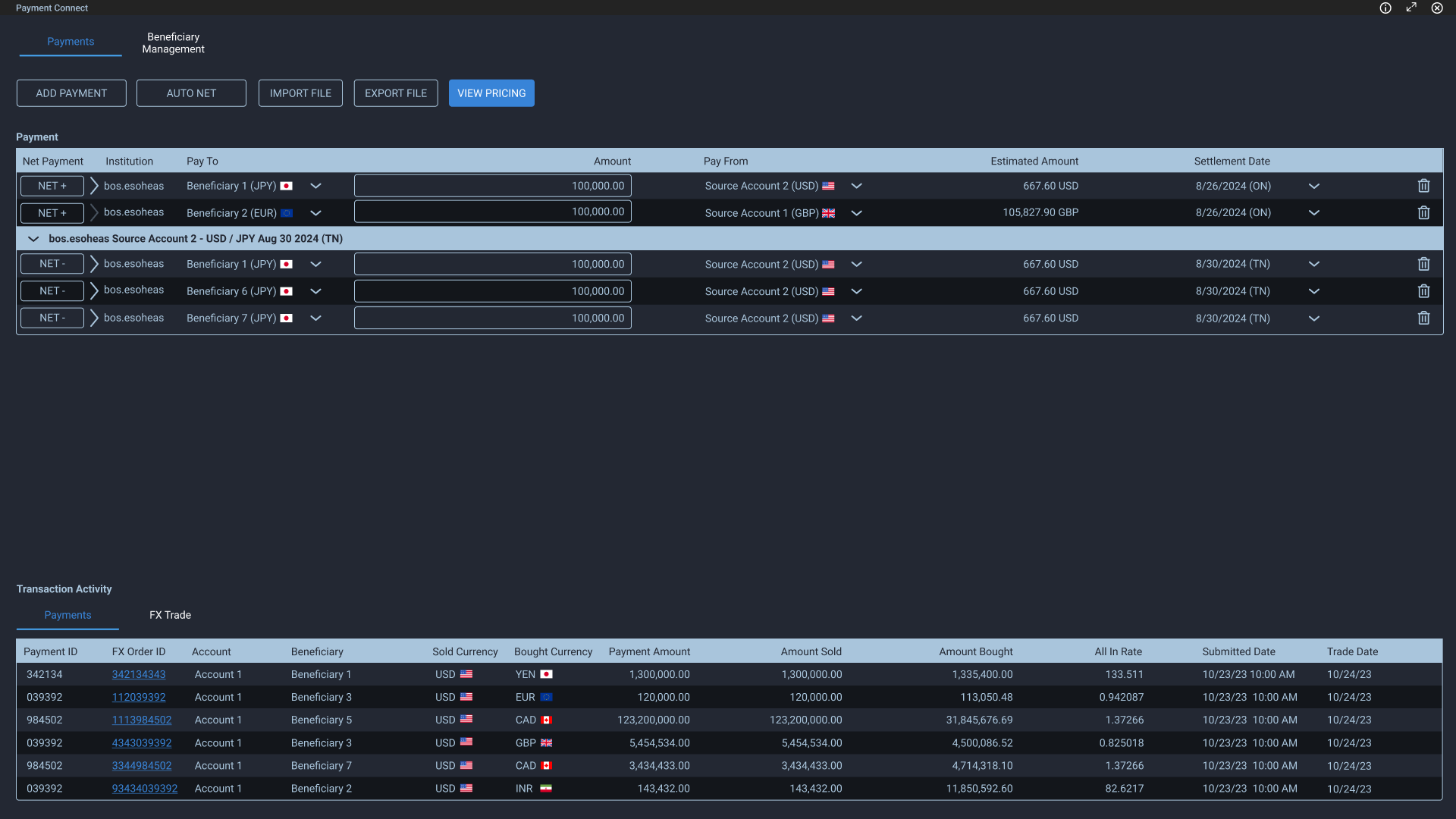
Table-Based Architecture & Grouping Logic
Financial software heavily relies on table-based paradigms.
Rather than fight this convention, I leaned into it.
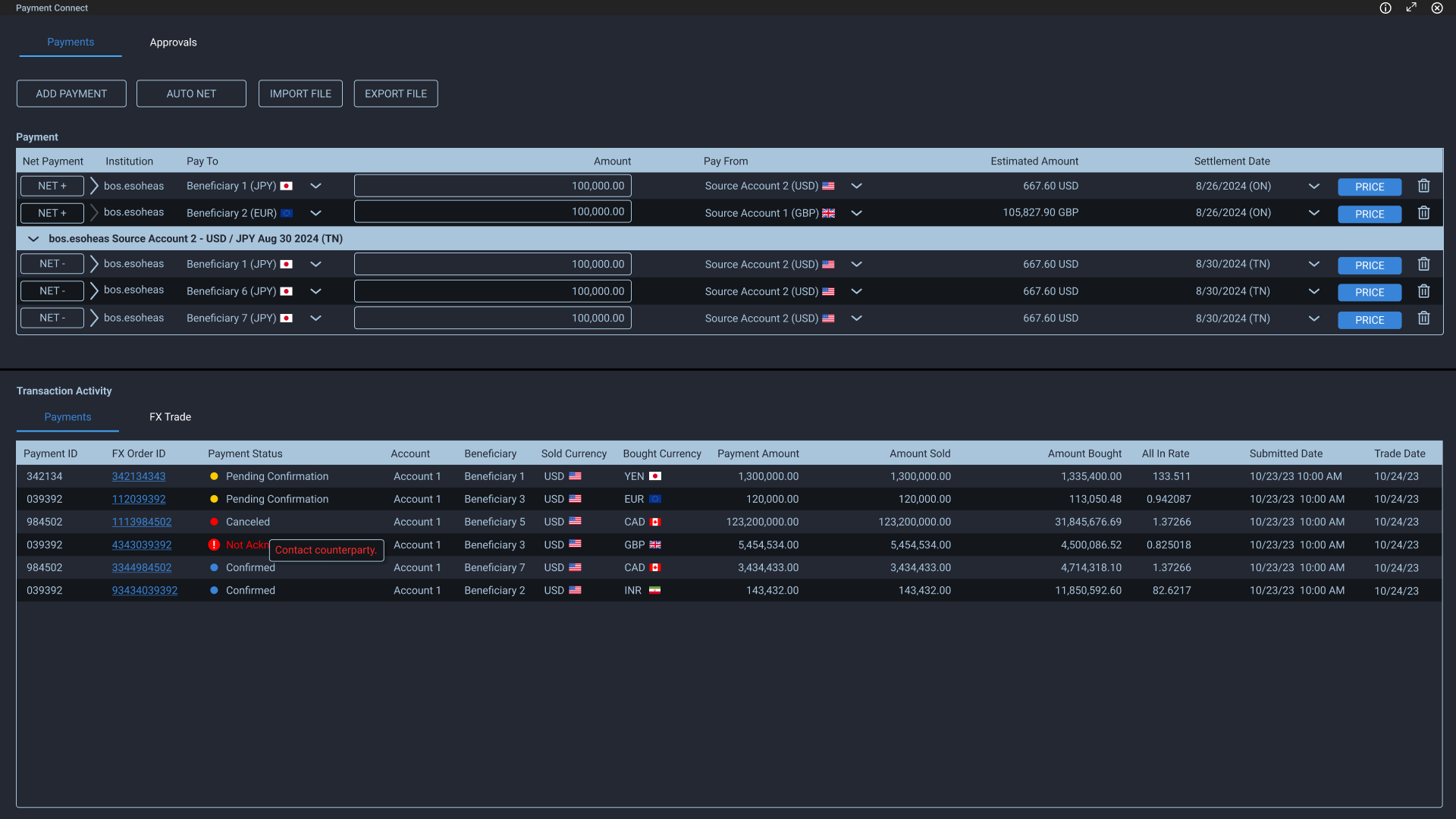
Using AG Grid, I designed a nested table view that grouped payments by:
- Currency
- Settlement date
- Source account
This allowed users to:
- See exposure by currency
- Understand funding allocation
- Execute grouped payments logically
- Maintain clarity during bulk operations
The grouping model preserved traditional financial UI expectations while introducing structural improvements.
We required a grouping/nesting system for payments with the same Currency pair, Settlement Date, and Source Account
Evolving Requirements & Constraints
This was a two-year agile initiative with expanding scope.
Over time, additional requirements included:
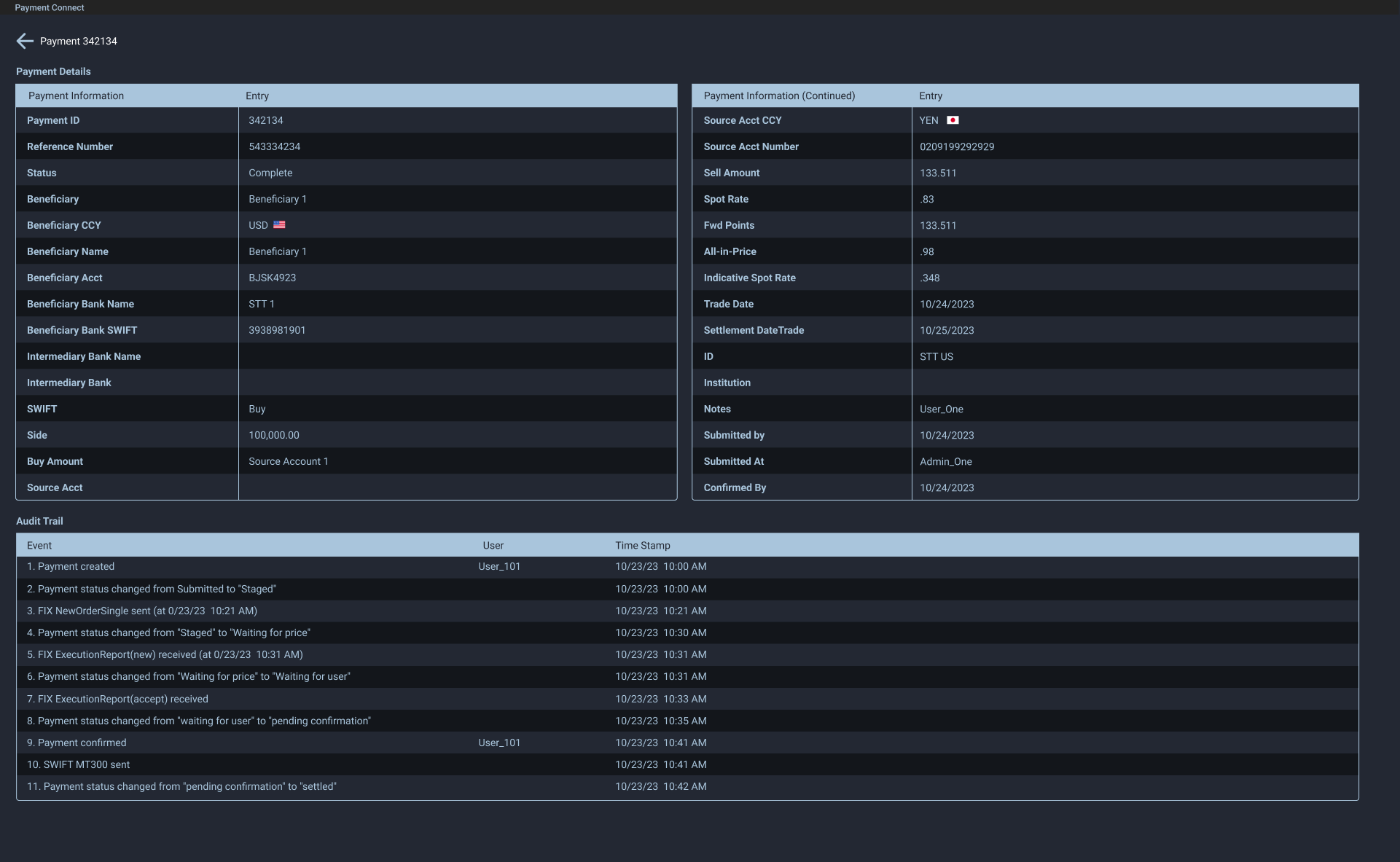
- Detailed audit history
- Payment status tracking
- Improved beneficiary selection (beyond simple dropdowns)
- Stronger SWIFT validation workflows
- Deeper reconciliation visibility
Design decisions were shaped by:
- Regulatory expectations
- Established financial software conventions
- Technical system limitations
- Design system constraints
- Ongoing client feedback
Requests often came through the product owner after coordination with clients and adjacent product teams. I continuously balanced new requirements with existing paradigms to avoid destabilizing the system.
Key Challenges
- Integrating fragmented backend systems into a single UX
- Designing for novice clarity and expert flexibility
- Managing duplicate naming and account ambiguity
- Maintaining financial accuracy within table constraints
- Adapting to shifting requirements without creating inconsistency
- Operating within legacy system limitations
Outcome
The unified application:
- Reduced operational friction across systems
- Simplified FX payment entry for treasury users
- Preserved control for experienced traders
- Enabled bulk and grouped execution
- Improved visibility into payment lifecycle and audit history
- Created a scalable foundation for future FX capabilities
Reflection
This project deepened my understanding of financial software design—especially the tension between:
- Established financial paradigms
- Modern UX expectations
- Regulatory constraints
- Technical system fragmentation
Designing within these boundaries required systems thinking, negotiation, and long-term coherence—not just screen design.
The most important outcome was not a single feature—it was transforming multiple disconnected processes into a unified mental model.
Project Gallery